
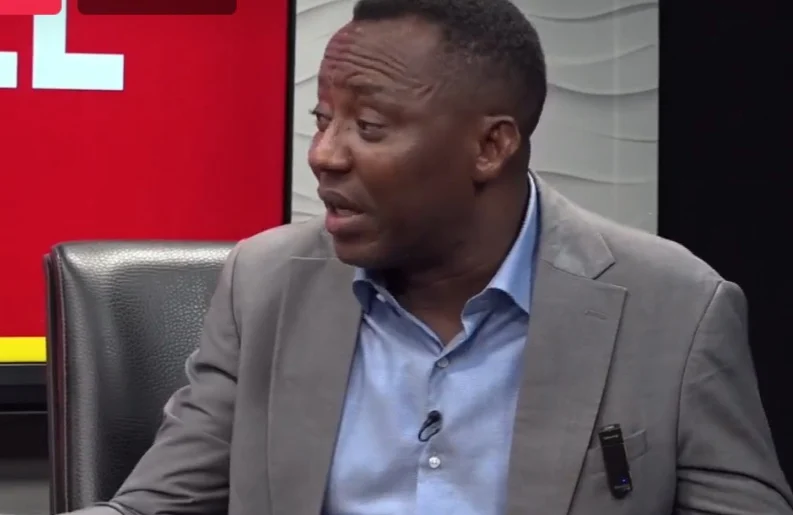
Tempers flared at the Federal High Court in Abuja on Monday, as counsel to Omoyele Sowore, Adeyinka Olumide-Fusika (SAN), engaged in a heated exchange with prosecuting counsel, Akinlolu Kehinde (SAN), whom he described as a “persecutor” during the continuation of Sowore’s criminal trial.
The courtroom drama unfolded after the defence sought another adjournment, blaming the court registry for its inability to obtain a Certified True Copy of documents it said were crucial to continuing its case.
Fusika told Justice Muhammed Umar that although the defence had been “reliably informed” that a witness from the Department of State Services was in court pursuant to a subpoena issued to the agency’s Director-General, Oluwatosin Ajayi, it could not proceed because it was yet to receive the certified court records.
According to him, the defence applied for the CTC on July 22, 2026, but was repeatedly informed by the registry that the trial judge had not approved the request.
He said the defence later discovered that Justice Umar had in fact approved the application on July 27.
“Obviously, the fault is not from Your Lordship’s end. It is a registry issue. The document is prefatory to the continuation of the defence,” Fusika submitted.
Opposing the application, Kehinde accused the defence of deliberately frustrating the trial and keeping the case unnecessarily on the court’s docket.
He reminded the court that at the last adjourned date, both parties had agreed that a nominated DSS officer would appear to testify for the defence and noted that the prosecution had fulfilled its own obligation.
“That part of the agreement was kept by the prosecution,” he said, adding that the witness was present to testify in relation to Exhibit DWD.
Kehinde argued that it was the duty of the defence, as the applicant, to diligently pursue its request at the registry rather than waiting until the day of hearing.
He urged the court to foreclose the defence’s case, arguing that repeated opportunities had been granted without progress.
“We further submit that it is a discretionary case management procedure, and it is not a breach of the constitutional right to fair hearing. Section 36(4) and (6) of the 1999 Constitution guarantees only the opportunity to be heard, not an unlimited right to delay the matter, as in the instant case,” he argued.
Responding, Fusika said the prosecution had failed to address the facts placed before the court and had instead chosen to blame the defence for circumstances beyond its control.